They build independently.
You stay in the loop.
Start their lesson plan, see what they make and hear when something matters — without standing over their shoulder.
 Your viewStay close.
Give them space.
 Start once10-week planWeek 3 of 10
 See clearlyTheir progress11 lessons done
 Hear when it mattersUseful updatesJust handed in
 Safe by designPip guidesYou don't hover
You press Start. It runs itself.
One path through everything Pip’s Lab teaches: 35 lessons in four blocks — games, then websites with real databases, then gadgets and sensors, then problems that need all three. You start it from your page, and today becomes Day 1.
A new lesson arrives every day or two — the harder ones get longer — and lands pinned on your child's own page as the thing to do next. Each one is a real brief, marked properly when they hand it in.
Life happens, so the clock is yours: Pause freezes it for a holiday, Resume moves every remaining deadline on by exactly the break they had, and Restart puts them back to Day 1 whenever you like.
Train your child for the future.
Nothing to install and nothing to buy. Whatever they ask for opens in the browser already working — then they take it apart and change it, which is where the learning actually happens.
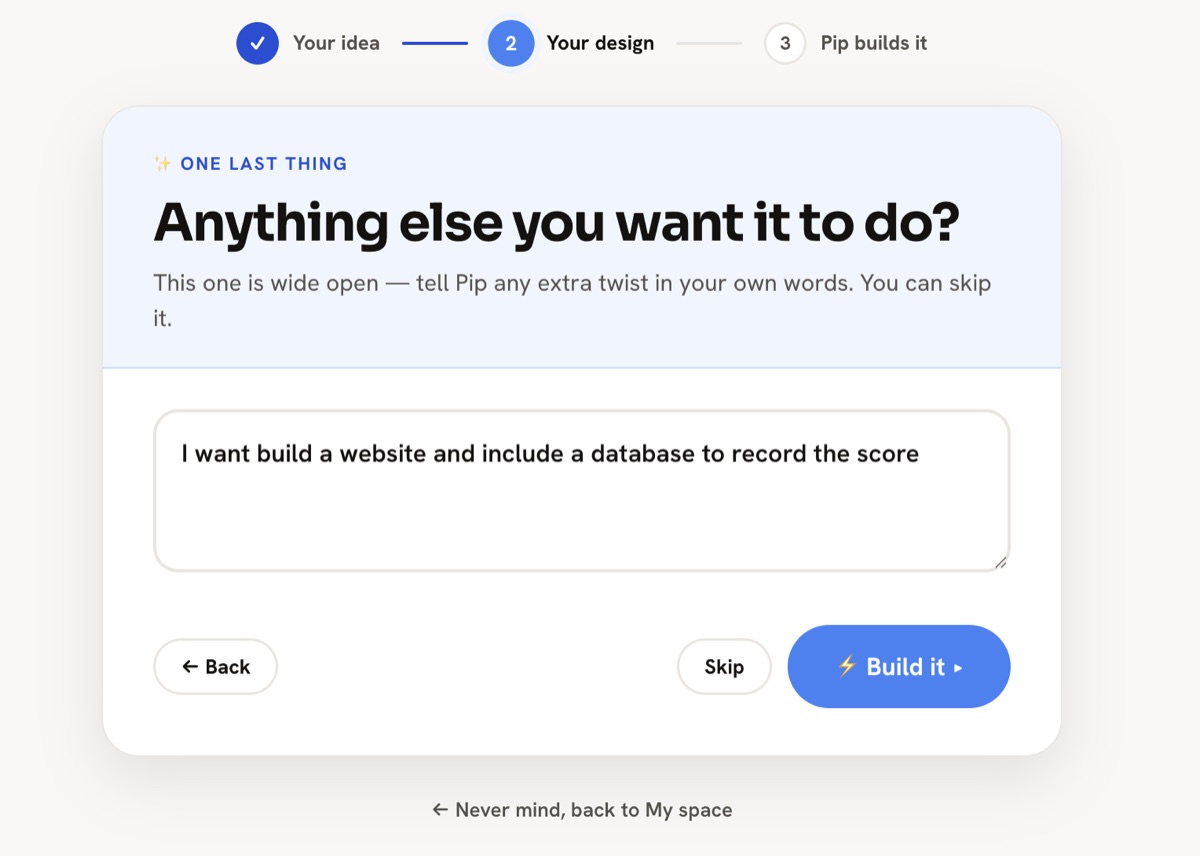
They say what they want, in their own words.
No menu of pre-approved projects. Pip asks about the idea, then the design, and gives them one open box to add whatever twist they were really after.
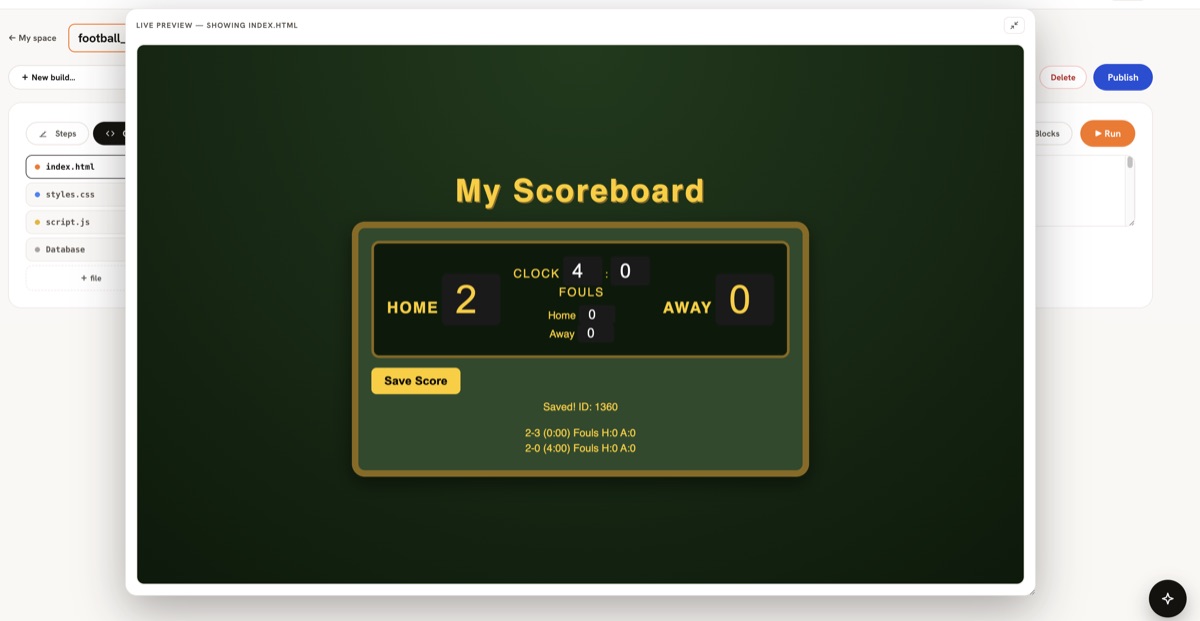
Pip builds it. Then they take it apart.
A working football scoreboard, saving every result to its own database — because that is what this child asked for. The files are all there to open, change and run again, and every save keeps the version before it.
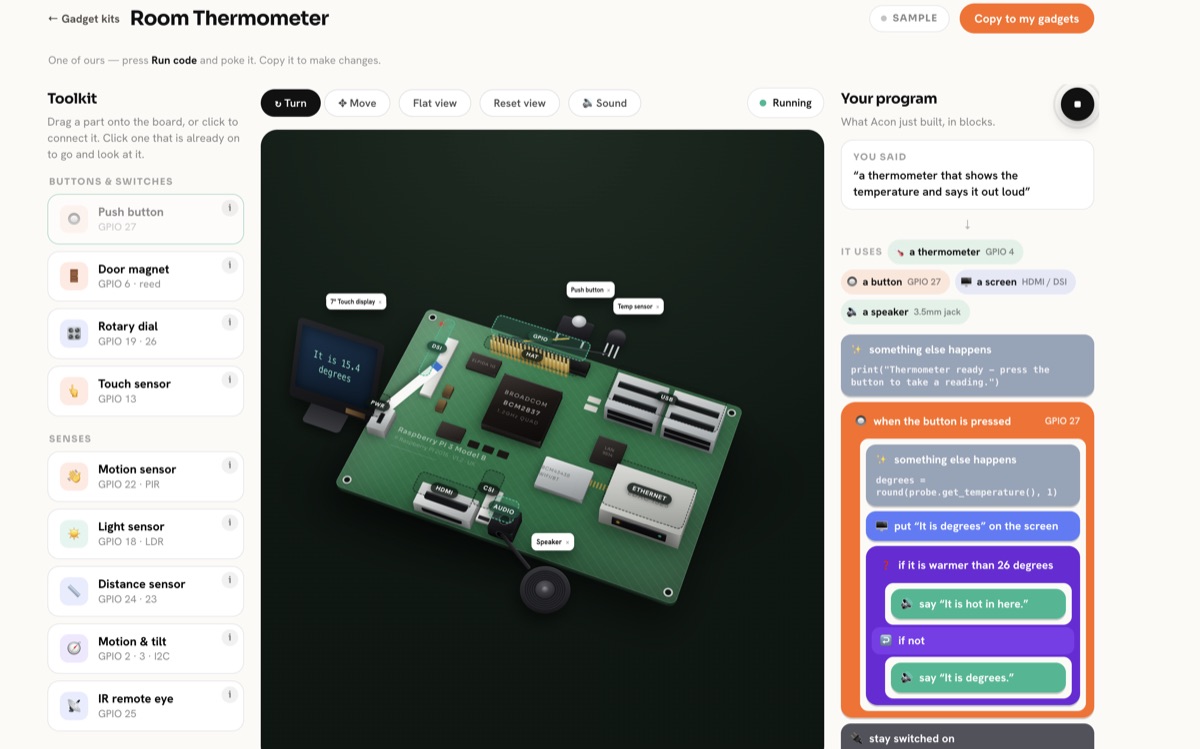
They can build gadgets too, without buying any.
The parts are on screen, so nothing gets ordered, wired up or broken. They drag on a thermometer and work out how it should decide what to say — the same thinking a real one needs.
Your own page, about your children.
Each child gets a login you make from yours — a first name, a username, a password. No email address, theirs or yours.
Their card on your page shows the plan ticking off, and everything opens read-only — you see exactly what they see, marks included, with their own code quoted as the evidence.
Any week you like, set a one-off challenge on top. It lands pinned on their page, with your name on it.
Know how they are doing, without asking.
The moment they hand a lesson in, the result is in your inbox — with the score, while it is still worth talking about at dinner. When they start building something of their own, you hear about that too.
Everything else is one morning summary — what is due, what is late, what has just unlocked — so you stay close without logging in or standing over their shoulder. A quiet week sends nothing, every email has a switch on your page, and none of it ever goes to your child.
The limits are in the build, not in a settings page.
 It will not do their homework
Essay questions, worksheet answers and "what won the match" all come back the same way — as an offer to build something instead. It is not a filter that can be talked round; it is the only thing the assistant knows how to say yes to.
 Their code cannot phone out
Before a line a child wrote is allowed to run, the sandbox deletes the functions that reach the internet — fetch, XMLHttpRequest, WebSocket and the rest. Not switched off. Removed, so there is nothing left to switch back on.
 There is nobody to talk to
No feed, no comments, no messaging between accounts, no way for a stranger to arrive. The only person your child talks to in Pip’s Lab is Pip, and Pip only talks about what they are building.
A login you make yourself
You can create your child's account from yours with a first name, a username and a password. No email address is asked for and none is stored — so there is no inbox of theirs for anything to arrive in.

Start free tonight. No card.
The first topic — six lessons, marked on their own code — is free for up to three children, with a shelf of forty-nine ready-made games, websites and gadgets to pull apart. The full journey is $9.99 a month for the whole family. The fourth child is where a class begins.