The Pip’s Lab blog
Raising kids in the age of AI — without the panic.
Plain-words guides for parents on AI, safety and what children can actually build. New posts most weeks.
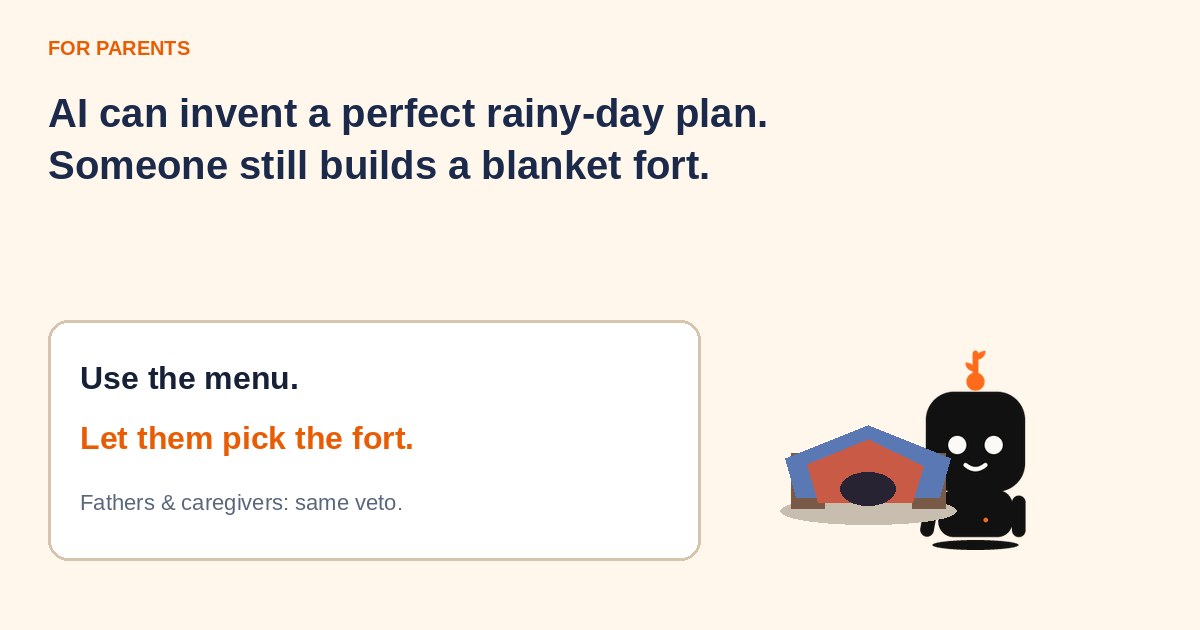
AI can invent a perfect rainy-day plan. Someone still builds a blanket fort.
AI invents tidy indoor plans; kids still build a blanket fort. Use the menu — fathers and caregivers included.
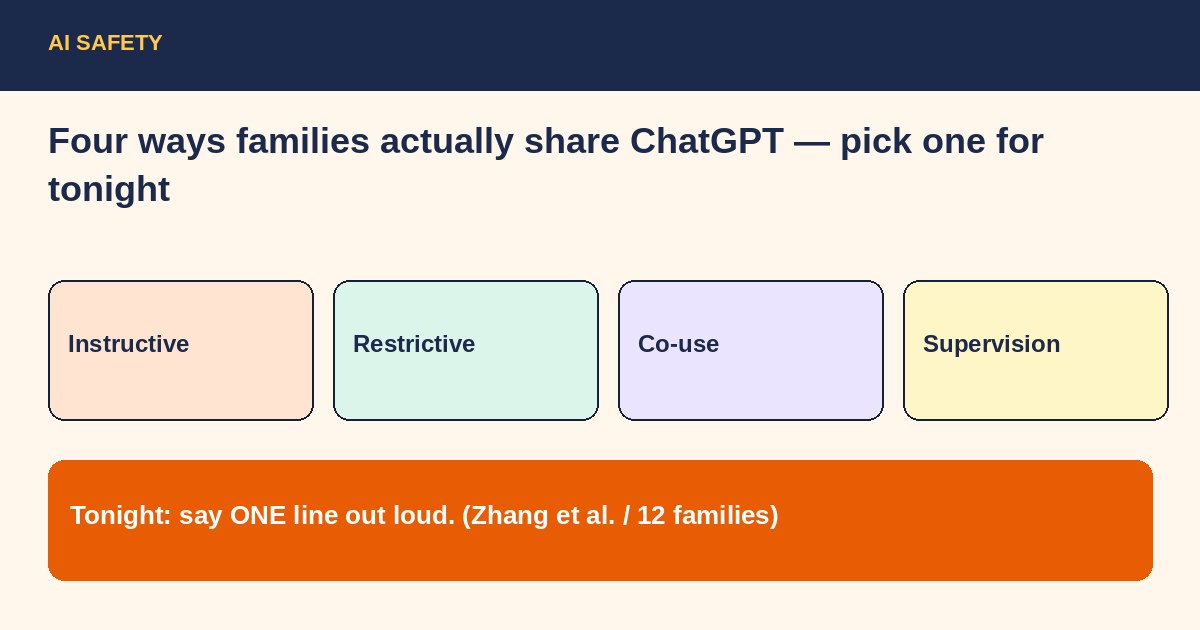
Four ways families actually share ChatGPT — pick one for tonight
Researchers sat with 12 U.S. families sharing ChatGPT. Four habits: talk, ask first, use together, supervise. Pick one tonight.
AI can invent a perfect car-ride game. Someone still picks I Spy.
AI invents tidy quiet car games; kids still pick I Spy. Use the menu — fathers and caregivers included.
Under 13 and a chatbot? One sticky-note rule that matches UNESCO’s line
UNESCO draws a cautious under-13 line for independent GenAI. One sticky-note homework rule for tonight.
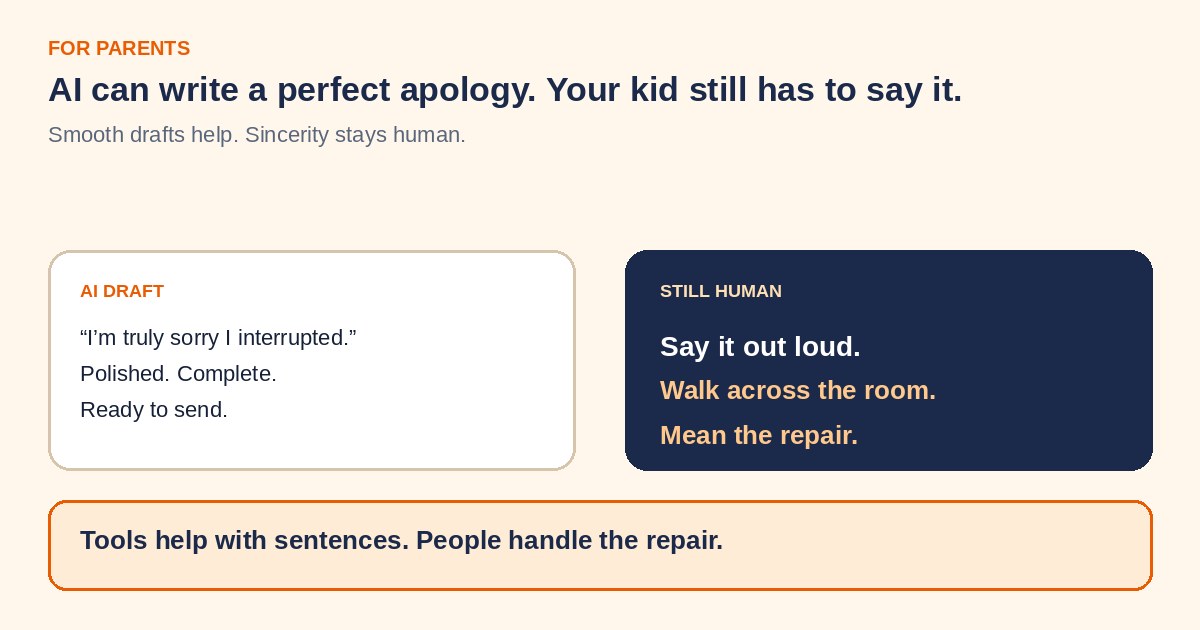
AI can write a perfect apology. Your kid still has to say it.
AI drafts smooth sorry-notes; sincerity and relationship repair stay human. Use the draft for wording — fathers and caregivers included.
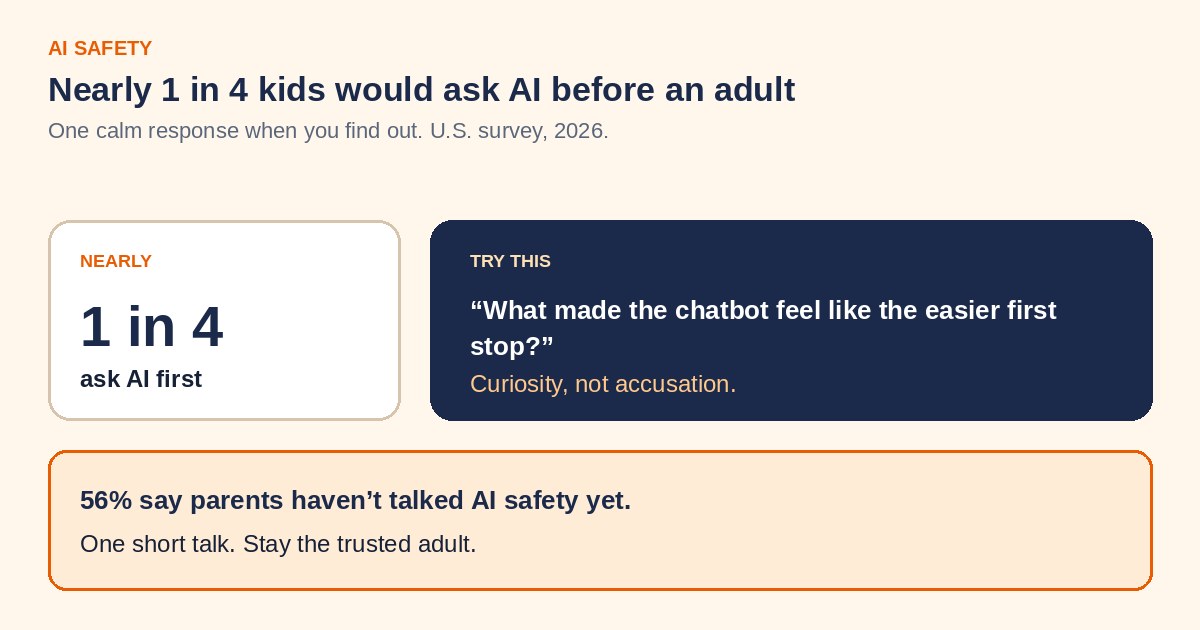
Nearly 1 in 4 kids would ask AI before an adult — one calm response
U.S. survey: nearly a quarter of 9–17s would ask a chatbot for homework help before a trusted adult. One calm parent response — curiosity, not accusation.
AI can plan the perfect after-school hour. Then football practice starts.
AI builds tidy after-school plans: snack, homework, free time. Then football practice and real pickup logistics rearrange the hour. Use the skeleton; keep rearranging human.
When AI sounds sure — three questions that teach checking
When AI sounds finished, it may still be guessing. Teach three calm check questions parents can ask — grounded in OpenAI and NIST — without fear lectures.
AI can pack the suitcase. It still can’t find the other shoe.
Instead of “Did you use AI?” try this Sunday question
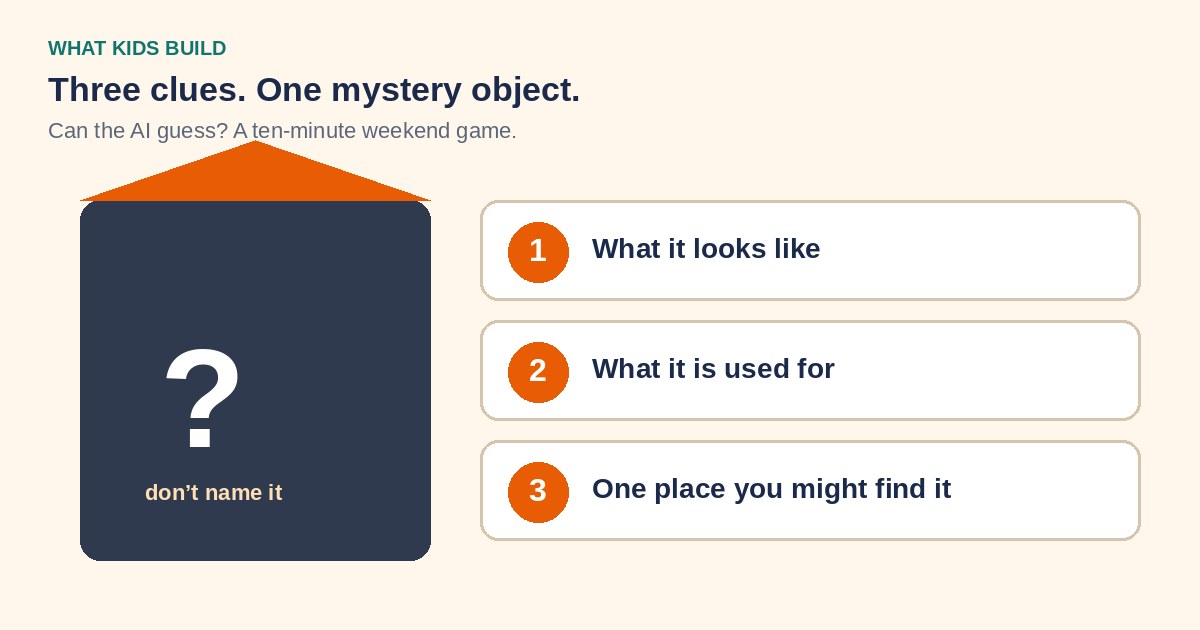
Three clues. One mystery object. Can the AI guess?
Pick an ordinary object and give the AI three clues. Kids see it does not read minds — it works with the information we give it.
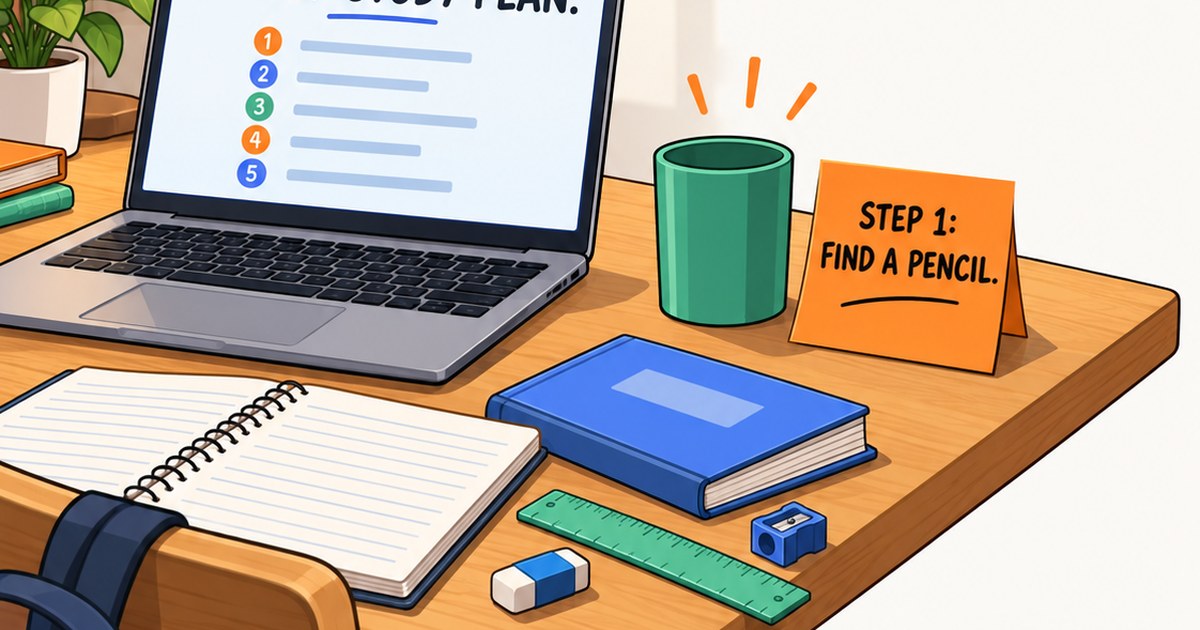
The study plan is ready. Where’s the pencil?
AI can map homework in seconds. Real work still starts with finding a pencil — and that tiny Step Zero matters more than a perfect plan.

AI knows almost everything — except which remote turns on your TV
Chatbots can explain galaxies and grammar. They still cannot tell your family which of the three remotes actually works.
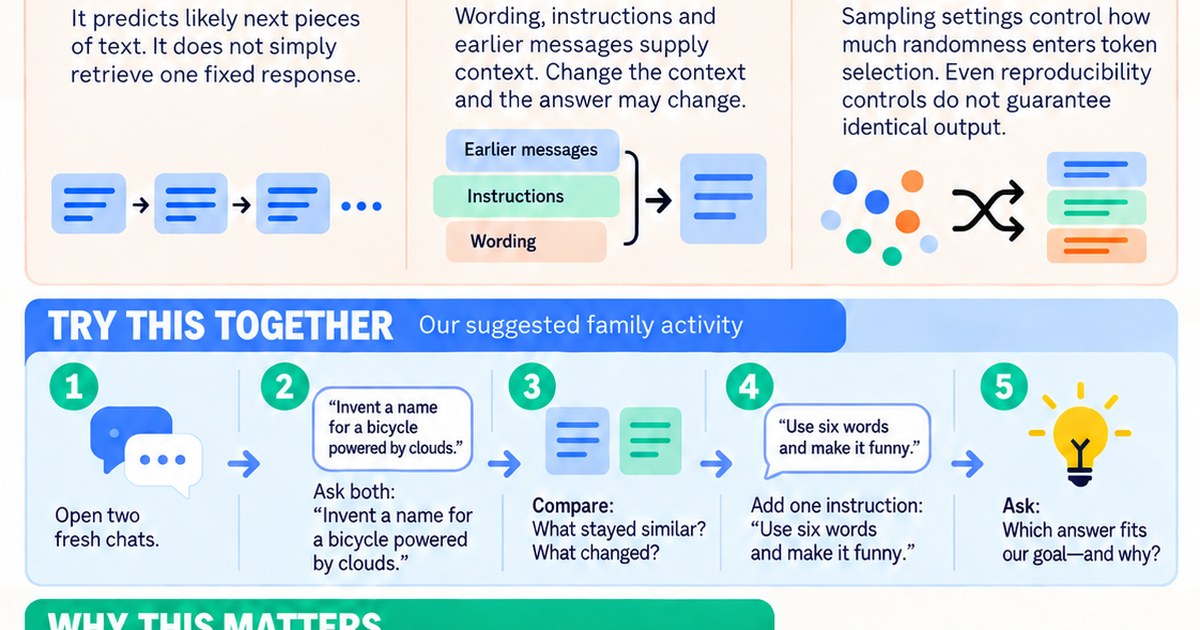
Same question, different AI answer — and why that’s normal
Ask twice and get two answers? Generative AI builds replies step by step. A calm family experiment turns surprise into judgment.
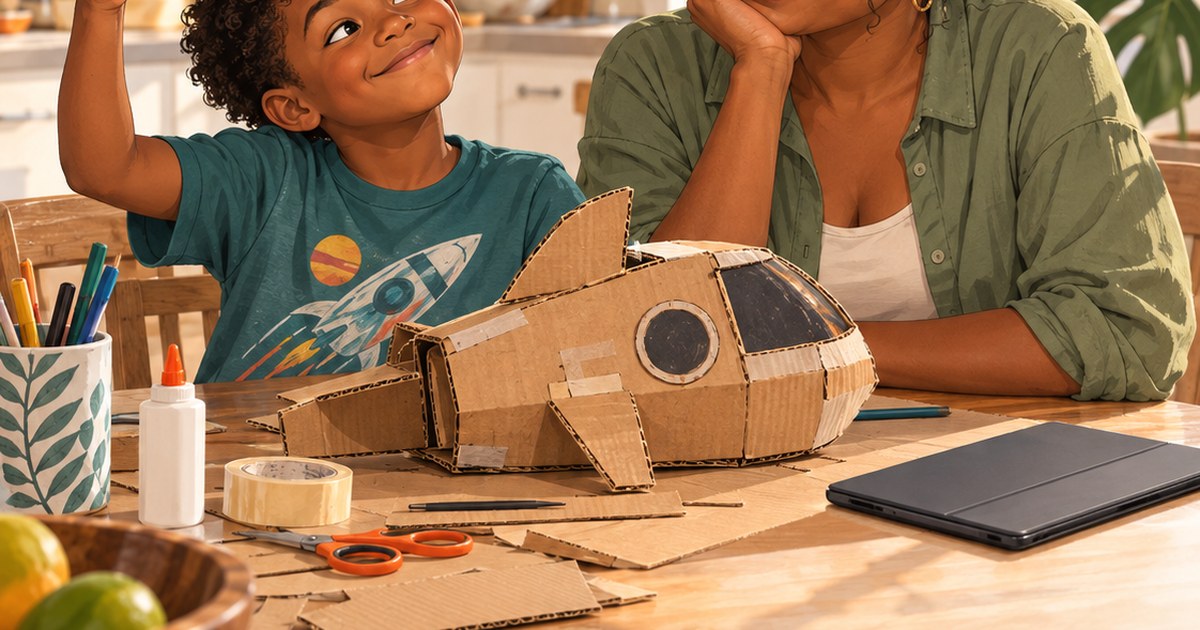
Let the cardboard rocket fly before you ask AI
Before the chatbot joins in, give imagination the first turn. Cardboard, tape and wonky ideas teach what kids can do with their own hands.
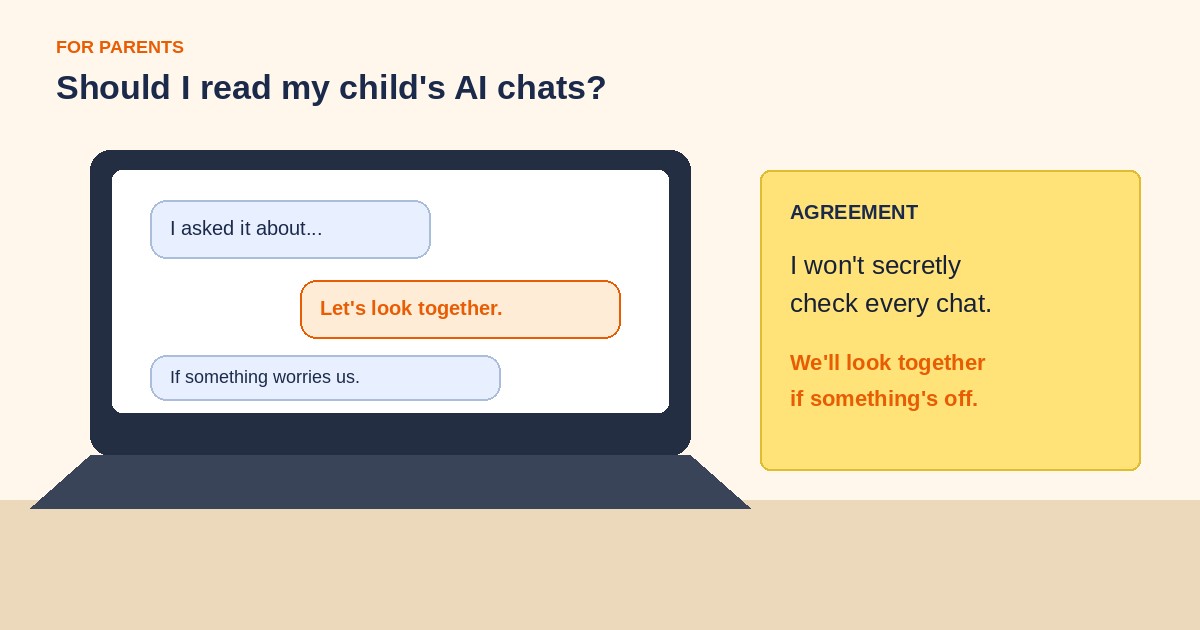
Should I read my child’s AI chats?
There is no one rule for every age. Agree first: enough openness to stay safe, enough trust to keep them talking.
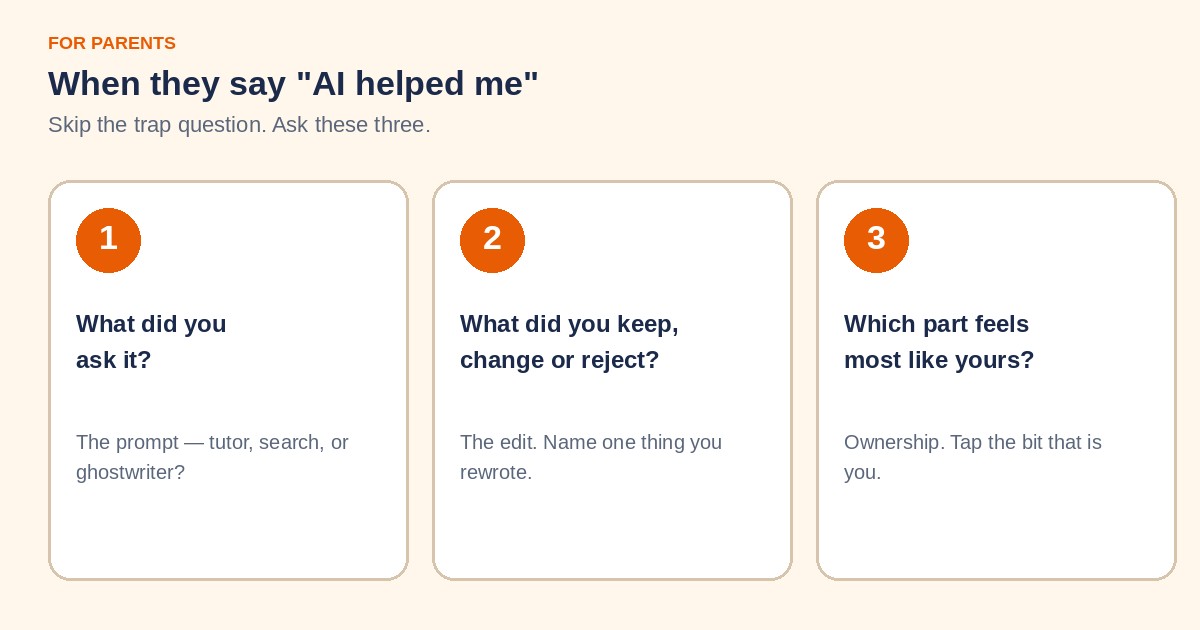
When they say “AI helped me,” skip the trap question
Swap “Did it do the work?” for three calmer questions. You still see how they used AI — and they practise explaining their choices.
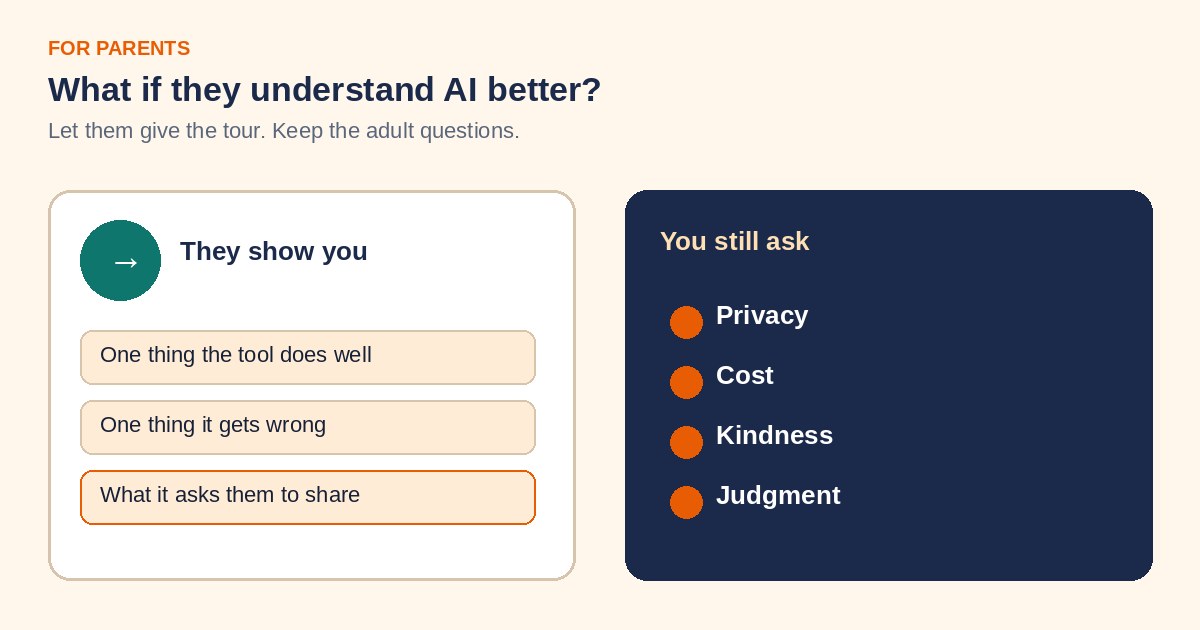
What if my child understands AI better than I do?
Let them be the tour guide. Keep the adult questions: privacy, cost, kindness and judgment. You do not need every feature.
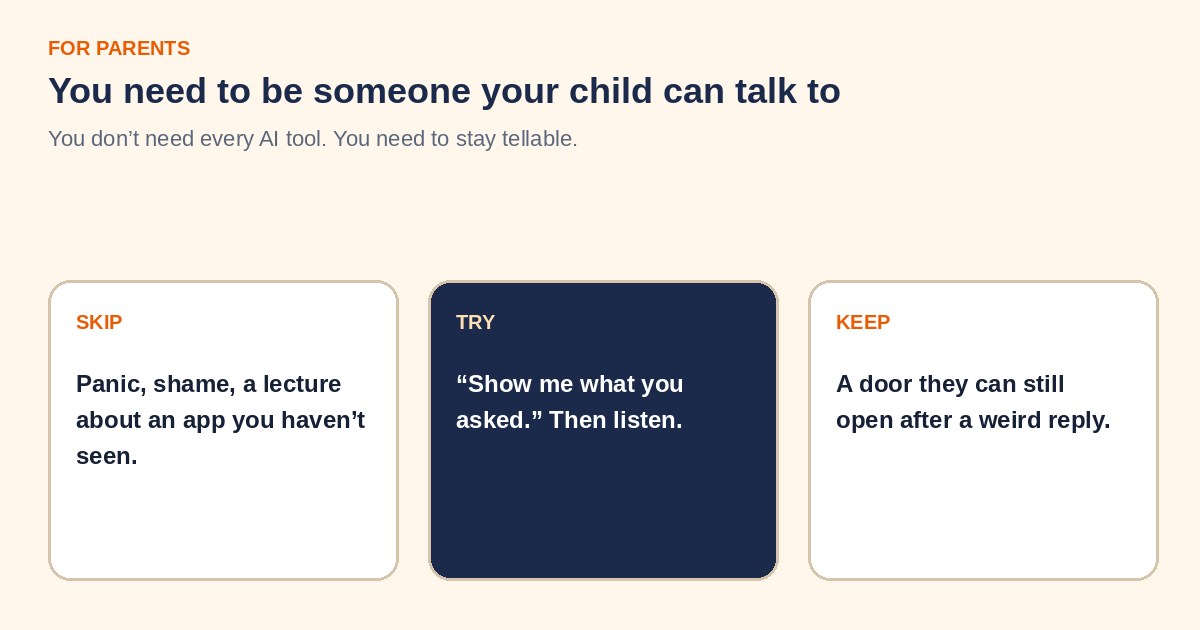
You need to be someone your child can talk to
You do not need to know every AI tool. You need to stay the person they will still tell — when a reply feels weird, or too heavy.
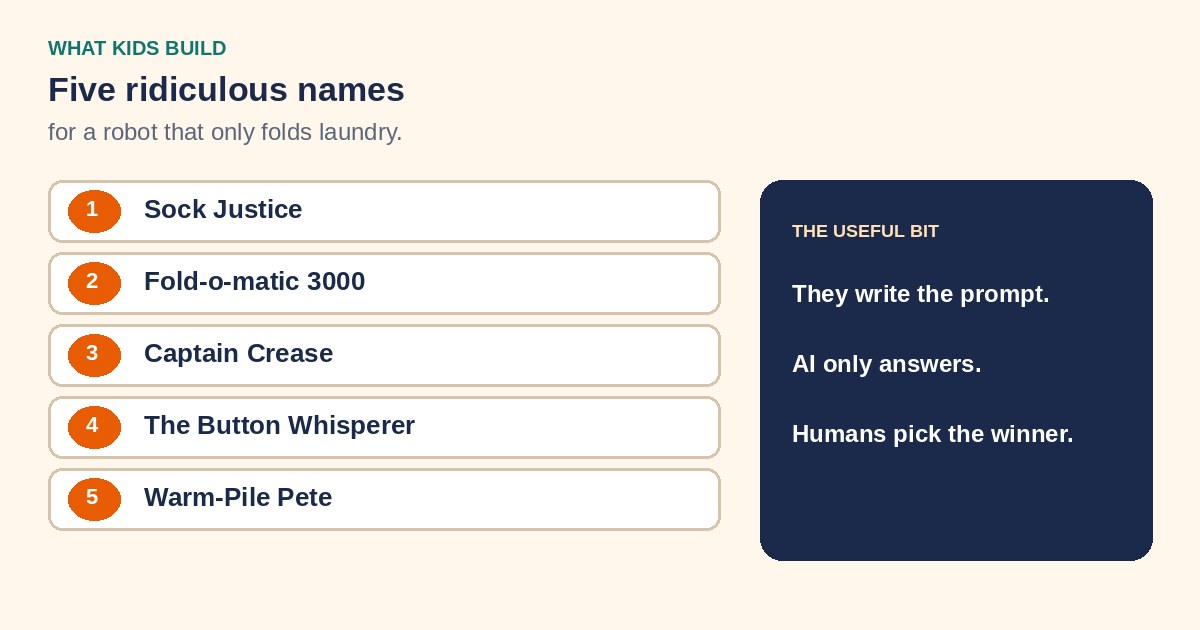
Five ridiculous names for a laundry robot
Tonight’s tiny challenge: let them invent the prompt, not just request the answer. Then let the humans pick the winner.
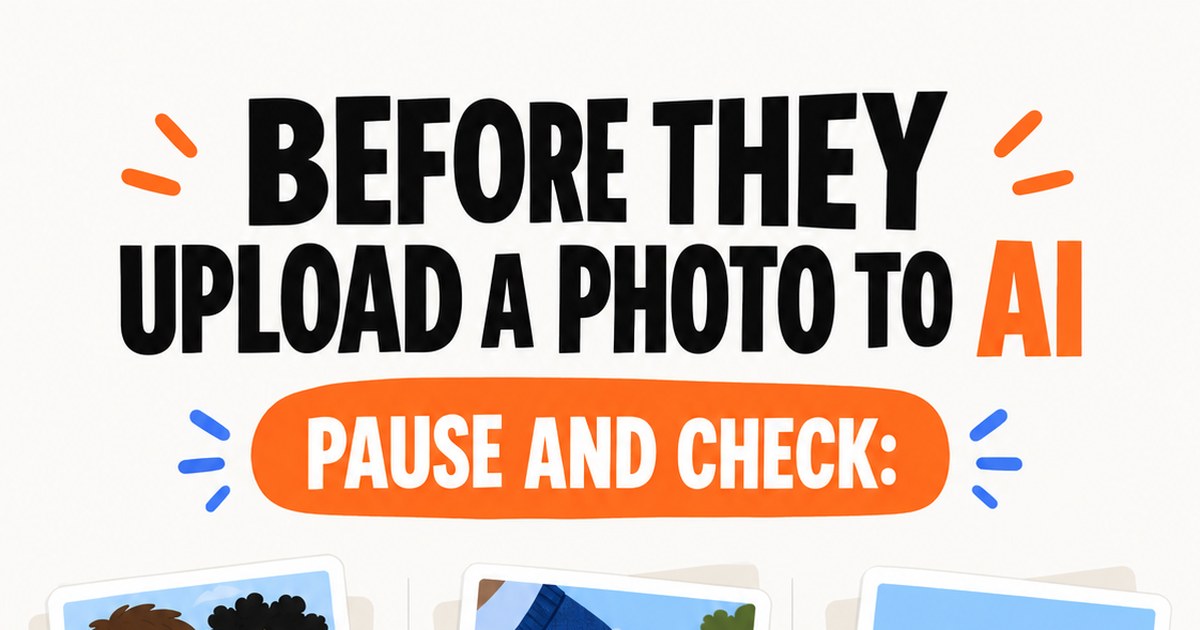
Before they upload a photo to AI
Three checks before a picture goes into a tool: who is in it, what it reveals, and whether a less personal image would do.
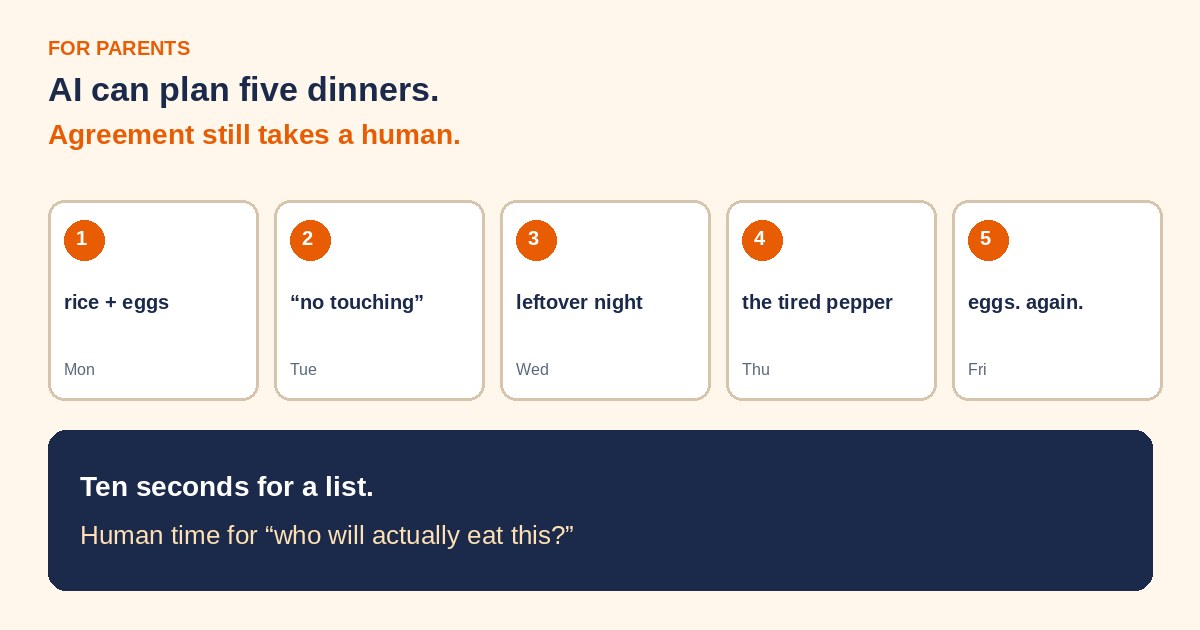
AI can plan five dinners. Agreement still takes a human.
A chatbot can hand you a week of meals in ten seconds. Getting everyone to eat them still requires advanced technology: a family.
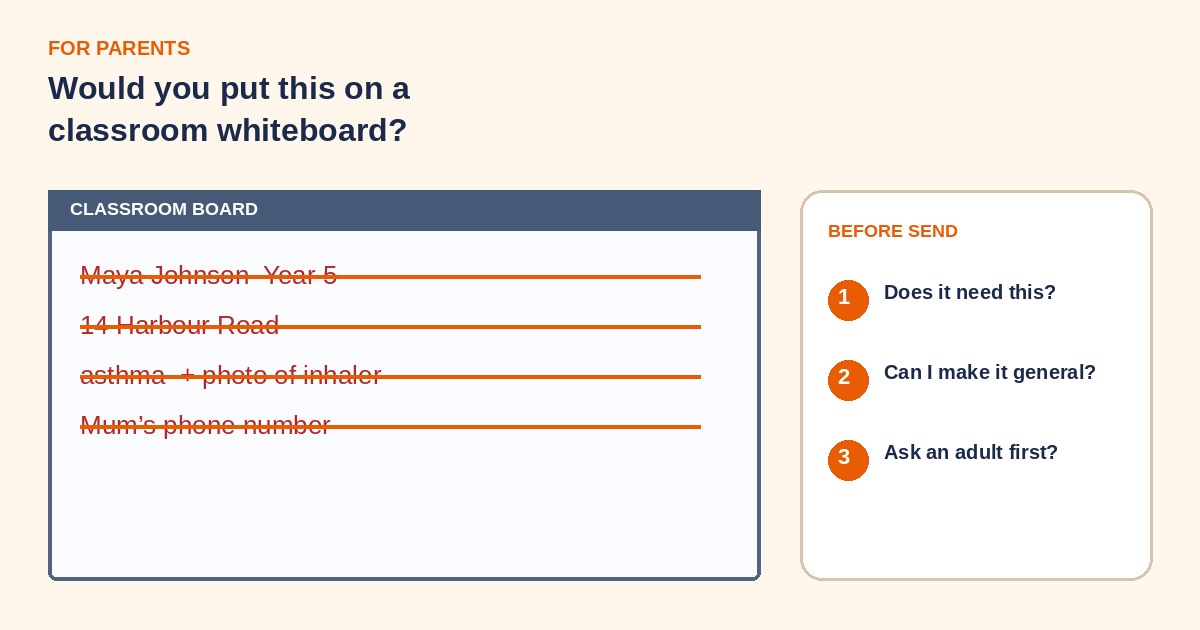
Would you put this on a classroom whiteboard?
A chat can feel private because nobody else is in the room. Teach one pause: if you would not write it on the board, leave it out.
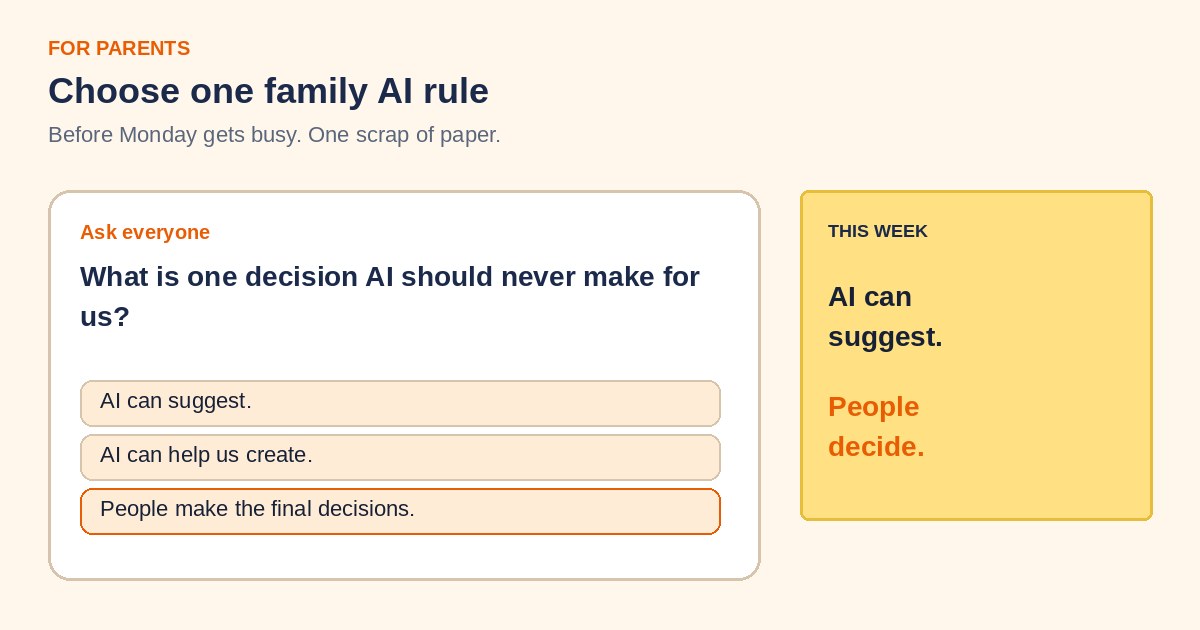
Choose one family AI rule before Monday
Ask everyone: what is one decision AI should never make for us? Write one rule. Stick it by the charger. No app required.
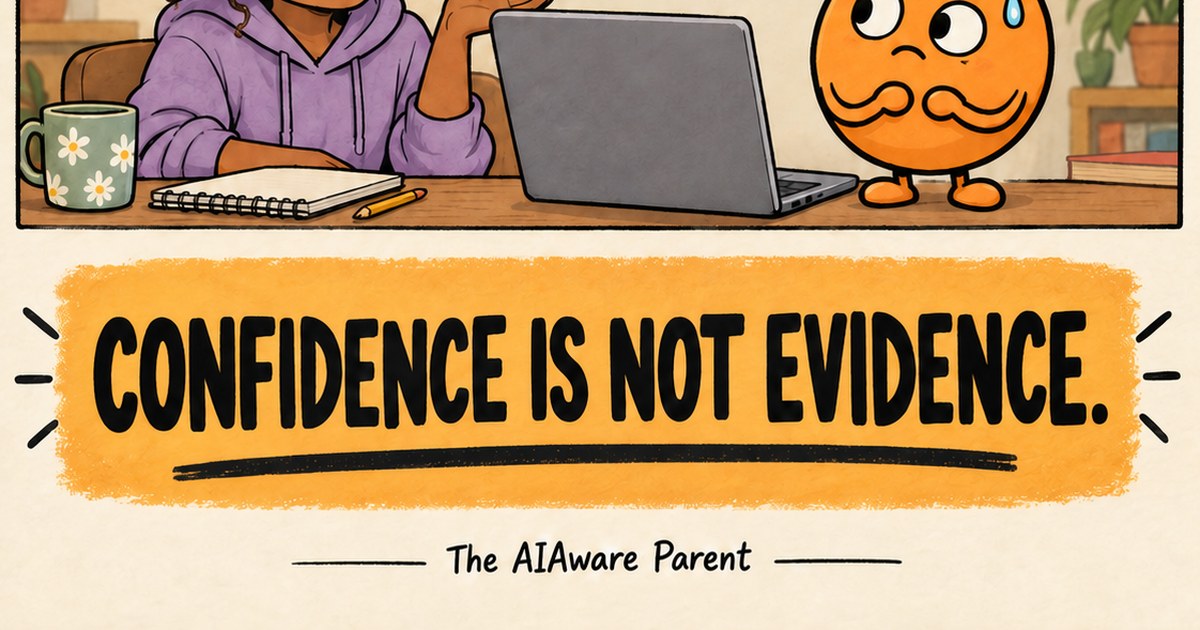
Confidence is not evidence
AI can sound completely certain and still be wrong. Teach one follow-up: “What source did you use?” Then open it together.
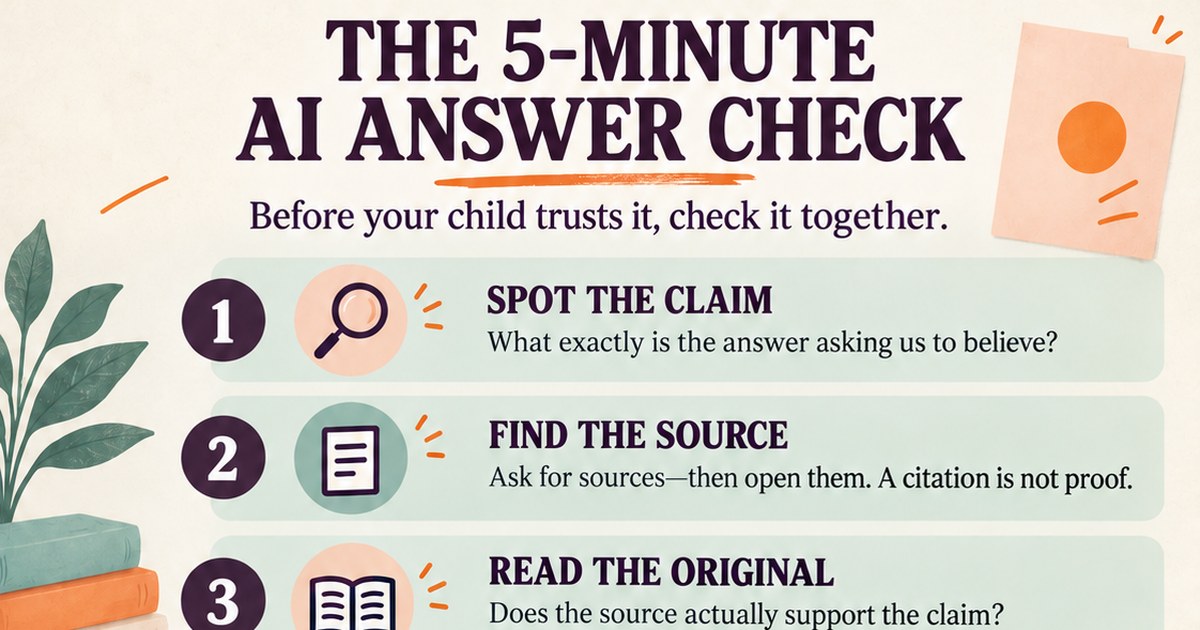
The 5-minute AI answer check
You do not need to fact-check every sentence. For the claims that matter, five minutes together beats “Is AI right?”
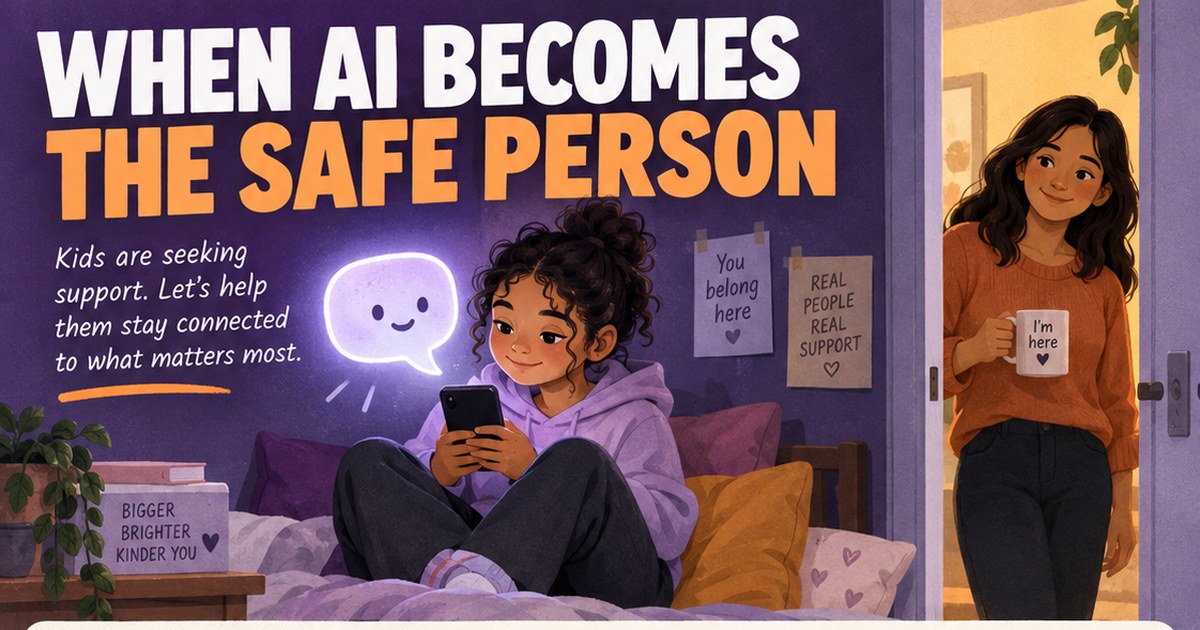
When AI becomes the safe person
A child may talk to AI because it feels private and always awake. That can be a signal — not a reason to start with a ban.
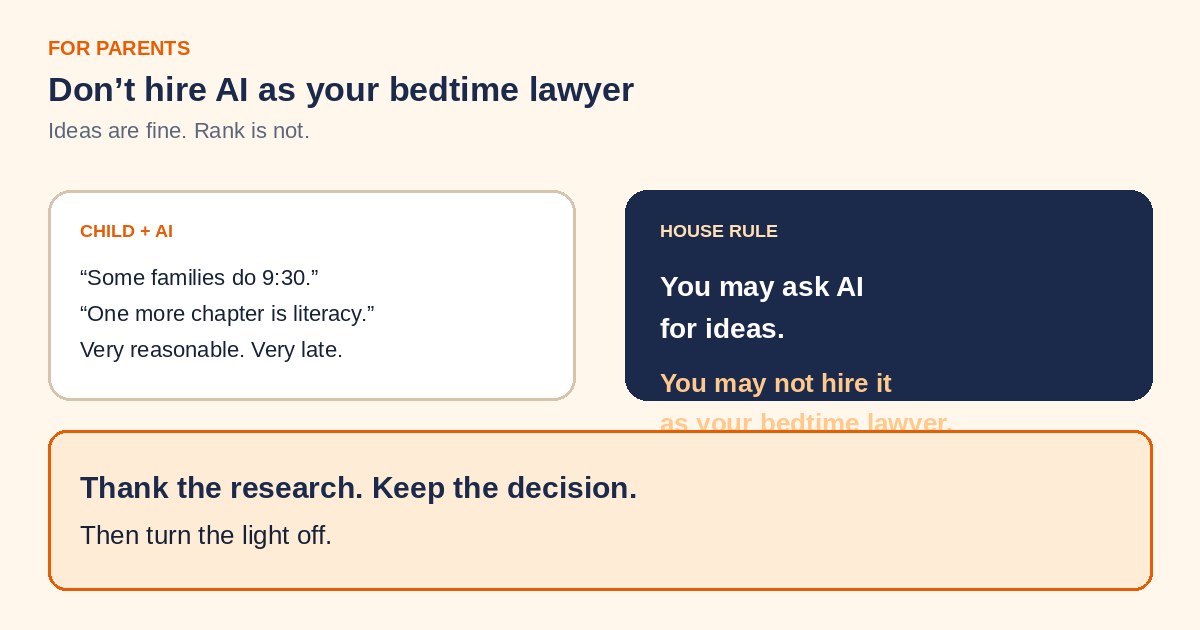
Don’t hire AI as your bedtime lawyer
Kids already know an advanced use of AI: a second opinion when Mum says bedtime. Ideas are fine. Rank is not.
New posts, wherever you already are.
Follow AI-Aware Parent on Facebook, or point any feed reader at the RSS feed.